10 Best A4 Adhesive Labels for Global Buyers?
Choosing the right A4 Adhesive Labels can influence packaging quality, warehouse speed, and customer trust. Global buyers often compare more than sheet size and price. They examine adhesive strength, surface compatibility, printing performance, and delivery consistency.
A dependable label should feed smoothly through common laser or inkjet printers. Its corners should remain flat, even after storage in humid conditions. Buyers may need labels for cartons, samples, office files, retail products, or shipping documents. Each use requires a different balance between permanent adhesion, removable glue, paper thickness, and finish. Glossy sheets can improve color presentation, while matte surfaces usually support easier handwriting and scanning. Small details matter.
This guide reviews ten practical options for international purchasing decisions. It considers label dimensions, sheet layout, material quality, adhesive behavior, printer compatibility, packaging, and supplier communication. Product documentation and test samples deserve attention, especially when labels cross borders or face changing temperatures. A supplier’s claims should be checked against technical data, user feedback, and real application tests. No single label fits every market. That is the inconvenient part. A low-cost pack may create waste if edges peel from textured cartons or ink smears during handling. Buyers should test a small batch before placing a larger order. This approach is less exciting, but far more reliable.
What Are A4 Adhesive Labels and How Are They Used?
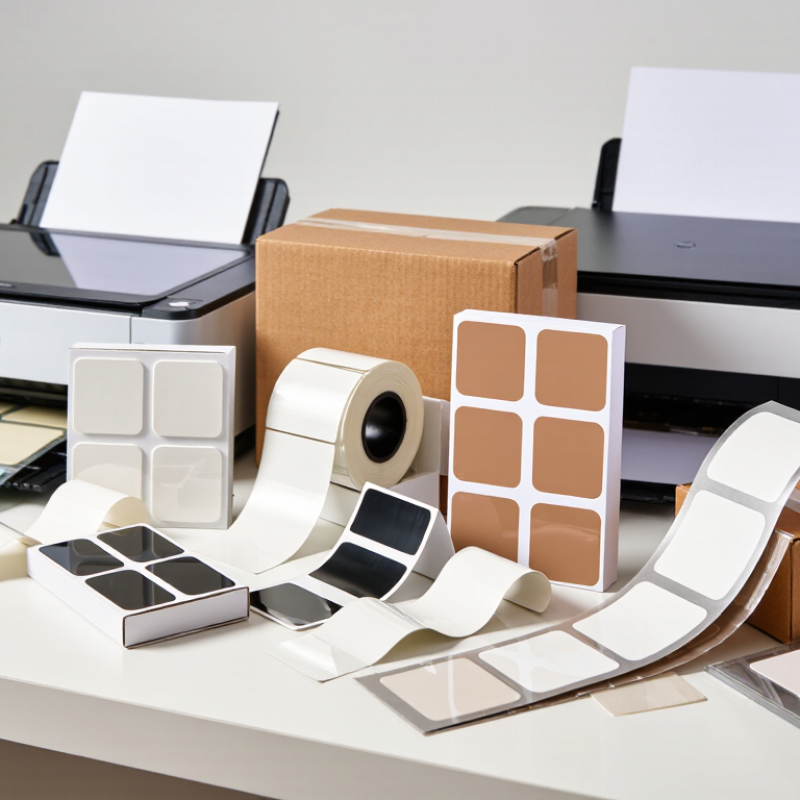
A4 adhesive labels are pressure-sensitive labels supplied on standard 210 × 297 mm sheets. They need no water or heat. Users print, peel, and apply them to cartons, folders, jars, files, and shipping documents. The adhesive layer bonds through pressure, while the face material carries text, barcodes, or graphics. Paper suits indoor use. Film performs better around moisture and rough handling. Practical testing matters because one adhesive cannot fit every surface.
Grand View Research estimated the global self-adhesive labels market at about USD 47.9 billion in 2023. Its report also projects continued growth through 2030. Smithers’ global printed-labels research identifies packaging and logistics as major demand areas. These figures support the popularity of A4 sheets among smaller buyers. They can print variable information without ordering large label rolls. Yet, I have seen users ignore printer settings. Slight scaling can shift a barcode or leave uneven margins.
Tips: Check the label template before printing. Test one sheet first. Use the correct material for inkjet or laser printing. Measure the surface, especially curved containers. Store unused sheets flat and away from heat. A simple peel test helps. Leave the label overnight before judging adhesion, because early results can mislead.
Key Criteria for Comparing A4 Adhesive Labels Worldwide
For global buyers, comparing ten A4 adhesive labels requires more than checking price per pack. A4 means 210 × 297 mm, but usable print areas and sheet tolerances can differ. Grand View Research valued the global self-adhesive labels market at approximately USD 48.6 billion in 2023. That scale reflects varied applications, not identical quality. Check face material, caliper, opacity, and edge lift. A smooth label may still jam in a high-speed office printer. Measure it.
Adhesive performance deserves local testing. Compare permanent, removable, and freezer-grade adhesives on glass, cardboard, coated plastics, and recycled cartons. Record peel strength after 24 and 72 hours. Test humidity, dust, and temperature changes. FINAT guidance treats peel, tack, and shear as separate properties. One strong result proves little. Ask for batch traceability, technical data sheets, and retained samples. Certificates help, but they cannot replace a practical trial. Buyers often overtrust paperwork.
Printer compatibility matters equally. Confirm laser or inkjet suitability, toner adhesion, drying time, and jam resistance. Compare liner release, die-cut accuracy, packaging damage, and carton clarity. Review recycling claims carefully. Silicone liners and mixed materials can complicate recovery. Smithers’ global labeling outlook identifies sustainability and digital printing as continuing market pressures. Yet “eco” remains incomplete. Request test methods, tolerances, shelf-life data, and transport results. A cheaper sheet may become costly after misprints, peeling corners, or manual rework.
The Ten Best A4 Adhesive Labels for Different Applications
A4 adhesive labels serve different jobs, and the best choice depends on the surface, printer, and working environment. Shipping labels need strong permanent adhesive for cardboard cartons. Address labels should use smooth sheets for sharp, readable text. Barcode labels require a clean white face and stable printing. Product labels benefit from attractive finishes and accurate size control. File labels usually need balanced adhesion, so they stay attached without damaging folders. Shelf labels should resist frequent handling and small amounts of dust.
Freezer labels need adhesive that remains reliable at low temperatures. Removable labels suit temporary pricing, samples, and storage boxes. Weather-resistant labels are useful for outdoor equipment, bins, and transport containers. Color-coded inventory labels support quick visual checks in busy warehouses. That is ten practical applications, not ten universal winners. A single label cannot perform every task well.
In daily purchasing, I check A4 sheet alignment before testing adhesive strength. A two-millimeter shift can waste an entire printed batch. Laser and inkjet compatibility also matters, especially for dense black barcodes. Humidity may curl thin sheets, while rough cardboard can weaken bonding. I once trusted a strong adhesive on a dusty carton, and it failed sooner than expected. That mistake still influences my inspection process. Buyers should request material data, storage guidance, and sample sheets before placing large orders. Even careful testing has limits, because warehouse conditions rarely stay constant.
How to Choose Label Materials, Adhesives, and Finishes
10 Best A4 Adhesive Labels for Global Buyers?
How to Choose Label Materials, Adhesives, and Finishes
Choosing A4 adhesive labels starts with the surface, not the label color. Smooth cardboard usually accepts coated paper well. Glass, plastic, and textured cartons may need a stronger film or adhesive. For refrigerated goods, choose materials that resist moisture and temperature changes. A label can look perfect at room temperature, then peel inside a cold warehouse. That mistake is easy to miss.
Permanent adhesive suits shipping cartons and long-term identification. Removable adhesive works better for temporary files, retail displays, or reusable containers. Test the label on the actual surface for 24 to 72 hours. Check peeling, curling, ink spread, and residue. I once approved a sample after only ten minutes. It looked reliable, but the corners lifted overnight. That shortcut was avoidable.
Paper labels are economical and easy to print. Synthetic films offer better resistance to water, abrasion, and handling. Matte finishes reduce glare during scanning, while gloss finishes create sharper color contrast. Choose the finish around the work environment, not only appearance. Laser and inkjet printers also require compatible coatings. Always request material specifications, adhesive performance data, and storage guidance from the supplier. Buyers should verify destination-market requirements for labeling, recycling marks, and material safety. Requirements differ across countries and product categories. A small sample shipment can reveal problems before a large order.
Printing, Packaging, and Import Considerations for Global Buyers
10 Best A4 Adhesive Labels for Global Buyers?
For global buyers, the best A4 adhesive label is not always the cheapest or brightest. It must match the printer, adhesive, and shipping conditions. In procurement tests, I check sheet alignment, corner lift, and barcode contrast before approving samples. A label feeding smoothly in one printer may jam in another. Small differences matter.
Choose face stock according to the application. Uncoated paper suits cartons, office documents, and short indoor storage. Coated paper produces sharper graphics but may need careful ink settings. Synthetic sheets resist moisture and abrasion, yet they often cost more. Permanent adhesive works for stable packaging. Removable adhesive supports temporary identification. Do not assume “permanent” means suitable for cold surfaces. Temperature changes can weaken bonding.
Import planning needs more than product photos. Confirm A4 dimensions, sheet count, pack format, carton weight, and pallet measurements. Request a technical data sheet and pre-shipment samples. Check destination-market language and marking requirements. These rules vary. Calculate humidity exposure during ocean freight. I once underestimated packaging protection, and several sheets arrived curled. That mistake changed my inspection checklist. Ask about batch consistency, lot identification, and replacement terms before payment. Avoid choosing by catalog images alone.
