How to Choose the Best PS Sheet Extrusion Line?
Choosing a Ps Sheet Extrusion Line is not just a matter of comparing prices or advertised output. The right system must match your resin, sheet thickness, production volume, and downstream forming process. A line that runs smoothly with one material may struggle with another. Small details matter: feeder accuracy, screw design, die control, cooling-roll temperature, and haul-off stability. Watch the sheet edge. Check thickness across its width. Ask how quickly operators can repeat a stable setup.
Professor John Vlachopoulos is a recognized researcher in polymer processing. I cannot verify a verbatim quotation from him about selecting a PS sheet line, so this is a paraphrase, not a direct quote: “Choose equipment around the material and process window, not headline capacity alone.” That principle helps buyers ask better questions. Request trial data using your intended polystyrene grade, and examine sample sheets for gauge variation, surface defects, and forming behavior. Ask for realistic energy and scrap estimates, not only best-case figures. Also confirm which controls and service support are included. A detailed specification can still miss practical constraints, such as limited floor space or operator experience. Those gaps deserve honest review. No brochure settles them. This guide outlines the key criteria, supplier questions, and testing steps for making a more informed choice.
Define the Production Requirements for PS Sheet Manufacturing
A PS sheet extrusion line should be selected around the sheet you need to make, not a headline output figure. Define the resin type, such as GPPS or HIPS, and list the required sheet width, thickness range, color, and surface finish. These details affect the extruder, die, and roll stack. Be specific about thickness tolerance. “Thin sheet” is not a useful production target.
Consider the end use, too. A sheet for thermoforming may need consistent heating and forming behavior, while packaging or display applications can place greater emphasis on appearance and flatness. Record expected output per hour, roll dimensions, and whether sheets will be wound or cut into lengths. Details matter. Check what utilities, floor space, and operator skills are available at the plant. Not every target can be met at every line speed; test runs with the intended resin can reveal practical limits. It is easy to overlook changeover time, especially when colors or thicknesses vary. A written specification gives suppliers something concrete to assess, though it may need revision after production trials.
Identify the Main Components of a PS Sheet Extrusion Line
How to Choose the Best PS Sheet Extrusion Line?
Identify the Main Components of a PS Sheet Extrusion Line
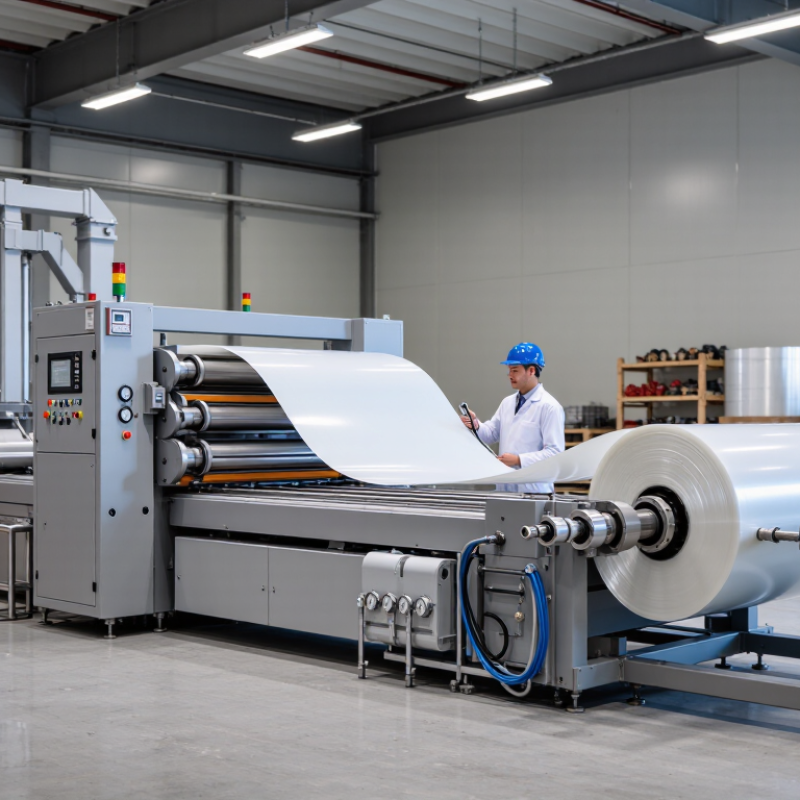
A PS sheet line turns resin pellets into a continuous, controlled sheet. The process starts at the hopper and dosing unit, where material is fed consistently. A heated barrel and screw melt and mix the polystyrene. A screen changer catches contaminants, while a melt pump can help stabilize output. The flat die shapes the melt; polished chill rolls cool it and set its thickness. A haul-off unit then pulls the sheet toward a cutter or winder. Small parts matter.
Check that each component suits your target sheet width, thickness, and output rate. PlasticsEurope’s Plastics – the Fast Facts 2023 reports global plastics production of 400.3 million tonnes in 2022. This is a broad market figure, not a PS-specific statistic, but it shows the scale of plastics processing. For line evaluation, ask for measured output and thickness tolerances using your intended resin. A neat control screen is not proof of stable production. Uneven cooling or worn rolls can still cause visible sheet variation.
Tips: Inspect the die lip, roll surfaces, and trim system closely. Ask how quickly operators can change thickness settings. Note any unclear answers; they may reveal gaps in training or maintenance planning.
Compare Output Capacity, Sheet Quality, and Energy Efficiency
A PS sheet extrusion line should match your actual production demand, not just an impressive capacity figure. Compare rated output with the thickness, width, and sheet grade you plan to run. A line rated for high output may struggle to maintain stable thickness when producing thin sheet at full speed. Ask for production data under conditions close to yours, and check whether the figures include normal trim and startup losses. Leave room for future demand, but avoid paying for capacity that will sit unused.
Sheet quality is just as important as kilograms per hour. Look for consistent thickness across the sheet, a flat surface, and clean edges. These details affect forming performance and the amount of material rejected downstream. Check the edges. Request trial samples and measure them at several points across the width, not only in the center. Cooling and roll settings matter, too, so ask how operators adjust them when the material or sheet thickness changes. One test run cannot prove everything; that limitation is easy to overlook.
Energy efficiency depends on more than the motor rating. Compare electricity use per kilogram of acceptable sheet, including heaters, drives, and cooling equipment. Insulation and variable-speed drives can reduce consumption, while frequent stops and long warm-up periods may erase those savings. Use the same output and product specifications for each comparison. The calculation may still miss local operating habits, so treat it as a guide, not a guarantee. A slightly slower line can be the better choice if it produces more usable sheet with less waste and lower energy use.
How to Choose the Best PS Sheet Extrusion Line? - Compare Output Capacity, Sheet Quality, and Energy Efficiency
| Line configuration | Typical output capacity | Typical sheet width | Typical sheet thickness | Indicative thickness consistency | Indicative electricity use | Best suited for |
Compact line
Typically 90–100 mm screw | About 100–250 kg/h | About 600–1,000 mm | About 0.3–2.0 mm | Around ±3–5% of nominal thickness with stable operation and suitable controls | Approximately 0.30–0.45 kWh/kg | Lower-volume production, product trials, and narrower sheets |
Medium-capacity line
Typically 110–130 mm screw | About 250–450 kg/h | About 1,000–1,500 mm | About 0.4–3.0 mm | Around ±3–5% of nominal thickness with a well-tuned die and roll stack | Approximately 0.28–0.42 kWh/kg | Regular production with a mix of sheet widths and thicknesses |
High-capacity line
Typically 140–150 mm screw or larger | About 450–700 kg/h or more | About 1,500–2,000 mm or more | About 0.5–4.0 mm, depending on line design | Around ±3–5% of nominal thickness when process conditions and width are controlled | Approximately 0.25–0.40 kWh/kg | High-volume production and wide sheets; requires sufficient downstream handling capacity |
Figures are indicative planning ranges, not guaranteed specifications. Actual output and energy use depend on screw and die design, sheet width and thickness, PS grade, recycled content, operating conditions, and the measurement boundary. Compare suppliers using the same resin, product dimensions, and electricity-measurement method; confirm achievable tolerances with a production trial.
Evaluate Automation, Safety, and Maintenance Requirements
When choosing a PS sheet extrusion line, assess automation by its effect on daily control. Can operators adjust melt temperature, screw speed, and roll gap from one clear interface? Can the system flag gauge drift before a full sheet run is lost? Deloitte’s 2024 Smart Manufacturing Survey found that 92% of surveyed manufacturers see smart manufacturing as a key competitiveness driver. That figure supports connected controls, but it does not guarantee a good investment. Ask for a live demonstration using your resin and target sheet thickness. Check whether alarms are understandable, not merely numerous.
Safety deserves the same scrutiny as output. Inspect guarding around nip rolls, interlocked access doors, emergency stops, and isolation points for heaters and drives. OSHA estimates that effective lockout/tagout practices can prevent 120 fatalities and 50,000 injuries annually. Confirm that maintenance staff can isolate energy safely and reach components without awkward workarounds. It still gets messy. A polished safety presentation cannot replace a walk-through with the people who will operate the line.
Maintenance needs are easiest to judge at the machine. Check access to the die, screen changer, cooling rolls, and lubrication points. Ask how quickly technicians can replace a thermocouple or inspect a clogged filter. Review logs for melt pressure, motor load, and sheet gauge; useful trends can reveal wear before defects spread. Request a written preventive-maintenance schedule and typical changeover times. Then compare them with your staffing and spare-parts capacity. A highly automated line may reduce routine adjustments, yet create harder troubleshooting when sensors fail. That trade-off is worth discussing openly.
Assess Supplier Support, Total Cost, and Installation Needs
A PS sheet extrusion line is only as dependable as the support behind it. Ask who will answer technical questions after delivery, and how quickly. A useful supplier should explain commissioning, operator training, and troubleshooting with clear examples, not vague promises. Request a support schedule and a list of included services. That matters. If your team runs several shifts, confirm whether help is available outside normal office hours.
Compare the total cost, not only the quoted machine price. Include freight, installation labor, utilities, spare screws or heaters, and operator training. Ask which parts are wear items and how long replacements typically take to arrive. A low initial price can become expensive when a small component stops production. Small gaps add up. Still, cost estimates depend on your material, output targets, and local site conditions, so treat them as planning figures rather than guarantees.
Installation needs deserve an early site check. Measure doorways, ceiling clearance, floor loading, and the route from unloading area to production floor. Confirm electrical capacity, cooling water, compressed air, and ventilation requirements before the line ships. A layout drawing helps, but it may miss a column or an awkward turn. Walk the route with the installation team if possible. It can feel overly cautious; moving heavy equipment later is usually worse.
