
How to Choose the Right Bulk Sack Supplier in 2026?
Choosing the right Bulk Sack supplier in 2026 requires more than comparing prices on a quotation sheet. The supplier must understand your product, filling process, storage conditions, and delivery risks. A sack carrying powdered minerals needs different protection from one holding grain, plastic pellets, or construction materials. Fabric strength, safe working load, safety factor, liner design, seam quality, and moisture resistance all deserve close attention.
FIBC consultant Peter Harms offers a practical warning: “The cheapest sack is often the most expensive decision when performance fails.” His point is simple. A reliable supplier should provide clear specifications, production samples, inspection records, and traceable batch information. Ask how the factory controls woven polypropylene quality. Check whether stitching remains consistent across corners and lifting loops. Review test reports instead of accepting broad promises. Small details matter.
Experience also reveals weaknesses that brochures often hide. A supplier may offer excellent samples but struggle with repeat orders. Another may promise short lead times without explaining production capacity. That gap can damage an otherwise efficient supply chain. Visit the facility when possible, or request a documented third-party audit. Discuss rejected sacks, corrective actions, and communication during delays. No checklist is perfect. Human judgment still matters.
The strongest partnership combines technical competence, honest communication, and dependable quality. Before signing a long-term agreement, test the Bulk Sack under real filling, handling, stacking, and transport conditions. Measure dust leakage, deformation, discharge performance, and damage rates. A careful decision today can prevent torn packaging, delayed shipments, and avoidable product loss in 2026.
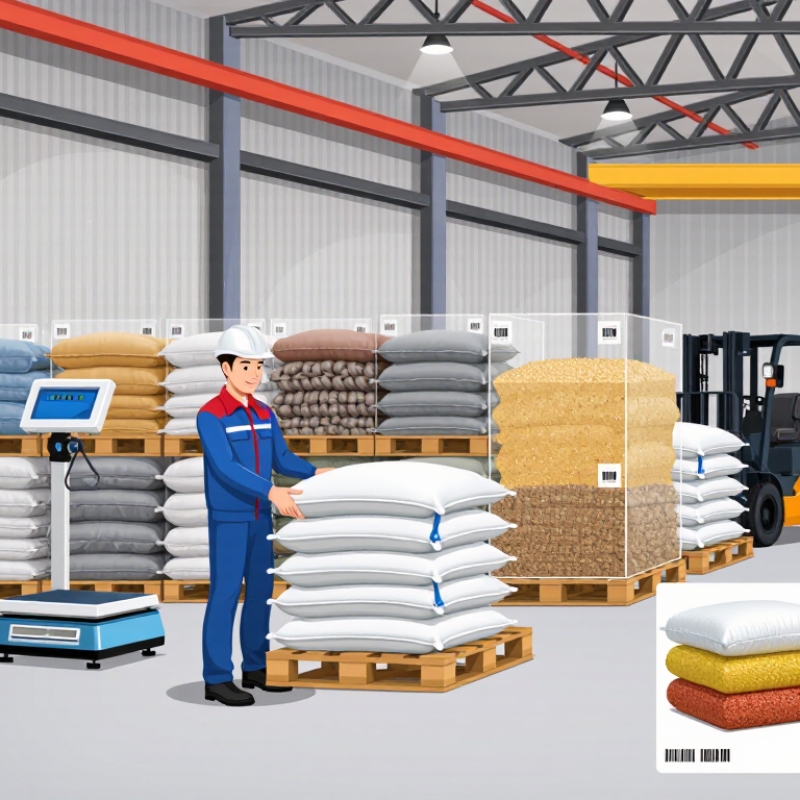
Define the Load: Match SWL, Fill Method, and 5:1 Testing to ISO 21898
How to Choose the Right Bulk Sack Supplier in 2026?
Define the load before comparing prices. State the product weight, density, temperature, moisture, and filling speed. A 1,000-kilogram SWL sack may not suit every powder or granule. Check the safety margin carefully.
The sack must handle the load during filling, storage, lifting, and discharge. Ask for test evidence aligned with ISO 21898, not only a sales specification.
Filling method changes the sack design. A fast pneumatic fill may need a vented fabric panel. A manual fill may require a wider top opening.
Confirm the inlet size, liner fit, lifting-loop position, and discharge spout dimensions. Watch the first trial closely.
Powder can gather near seams and create unexpected stress. That detail is easy to miss.
For a 5:1 ratio, ask what the figure actually represents. It should connect the minimum breaking load with the stated SWL, supported by controlled testing.
Request recent laboratory reports, production-batch traceability, and inspection records. The supplier should explain sample conditioning and test methods clearly.
A certificate alone is not enough. Sometimes, a neat document hides weak communication.
We have seen specifications copied between projects without checking the real load cycle. Recheck them.
Choose a supplier willing to review your handling process, not one offering the lowest unit price.
Screen Compliance: Check ISO 21898, UN Certification, REACH, and Food Rules
How to Choose the Right Bulk Sack Supplier in 2026?
A reliable supplier should explain compliance in practical terms. Ask whether its bulk sacks are tested against ISO 21898 for flexible intermediate bulk containers. Check the certificate scope, test date, material type, and production site. A certificate alone is not enough. Confirm that the supplied sack matches the tested design.
UN certification matters when the sack will carry regulated dangerous goods under applicable transport rules. Verify the UN mark, packaging group, test report, and authorized use. Do not accept a copied document without traceable details. The marking should match the sack’s construction, liner, lifting loops, and closure system.
REACH compliance helps confirm that restricted substances are managed in the materials and processes. Request a current declaration and ask how changes are controlled. For food applications, check the rules in every intended market. Food-contact declarations, migration testing, clean production areas, and batch traceability may all be necessary. Ask for a sealed sample and inspect its seams, inner liner, stitching, and odor. Request load-testing evidence from a recent production lot. In real purchasing work, documents can look correct while production has quietly changed. That is easy to miss. Recheck before each major order.
How to Choose the Right Bulk Sack Supplier in 2026?
Screen suppliers against the evidence relevant to your application. The chart shows the number of practical evidence checkpoints in this screening model: ISO 21898 scope and test records, UN packaging performance certification, REACH substance communication and restriction checks, and food-contact documentation where applicable. A UN certificate is required for dangerous-goods transport, while food-contact rules depend on the intended market and product.
Assess ESD Protection: Compare Type C and D FIBCs under IEC 61340-4-4
Choosing a bulk sack supplier in 2026 starts with ESD evidence, not a glossy product sheet. IEC 61340-4-4:2018 separates Type C and Type D FIBCs for electrostatic control. Type C uses conductive threads and requires grounding during filling and discharge. The standard sets its resistance to ground below 10 megohms. Type D dissipates charge through special fabric construction, without a grounding lead. Both require controlled production and documented testing.
Ask suppliers for current test reports, material specifications, and batch traceability. Check whether reports identify the exact fabric, liner, seam design, and manufacturing date. The standard also requires defined test conditions, so a passing result cannot automatically represent every shipment. That assumption is easy to regret. The European Agency for Safety and Health at Work identifies electrostatic discharge as a recognized ignition hazard in explosive atmospheres, reinforcing the need for site-specific assessment. IEC 61340-4-4:2018 remains the key technical reference for FIBC classification and performance verification.
Type C may suit operations with reliable grounding points and trained operators. Type D can reduce handling dependence, but it still needs compatibility checks with dust properties, humidity, filling speed, and nearby equipment. Request evidence from accredited laboratories, not only an internal declaration. A useful supplier should explain failed tests, corrective actions, and retesting frequency. Missing details matter. Use the sack only after its ESD class matches the facility’s risk assessment and operating procedure.
How to Choose the Right Bulk Sack Supplier in 2026? - Assess ESD Protection: Compare Type C and D FIBCs under IEC 61340-4-4
| Assessment Dimension | Type C FIBC | Type D FIBC | Supplier Evidence to Request | Procurement Decision Guide |
|---|---|---|---|---|
| Primary ESD control principle | Conductive fabric and conductive components are electrically connected and must be connected to a verified ground during filling, discharge and handling. | Dissipative fabric is designed to control electrostatic charge without relying on a dedicated grounding connection during normal operation. | Product classification, construction drawing, grounding instructions and the applicable IEC 61340-4-4 test report. | Select according to the available grounding infrastructure and the sensitivity of the filling and discharge process. |
| Grounding requirement | Mandatory in use. The grounding tab, grounding cord or equivalent connection must be attached to a suitable verified earth point before material transfer begins. | No dedicated grounding connection is normally required for the FIBC itself, provided the bag is used within its certified operating conditions. | Written operating procedure, grounding-point requirements, continuity checks and site installation recommendations. | Type C is preferable where a reliable grounding point and operator verification process are already available. |
| Typical resistance characteristic | The conductive system is commonly specified with resistance to ground below 1.0 × 10⁷ Ω, subject to the exact requirements and test methods of the applicable standard edition. | The surface and fabric are engineered to dissipate charge in a controlled manner; performance is not assessed solely by the Type C resistance-to-ground criterion. | Independent laboratory measurements, test conditions, sample identification and acceptance limits used for classification. | Do not compare Type C and Type D using resistance values alone; confirm the correct classification test for each type. |
| Dependence on operator behavior | High. Incorrect or missing grounding can remove the intended protection and create a hazardous operating condition. | Lower during routine handling because no grounding connection is normally needed, although correct procedures and inspection remain essential. | Training records, filling and discharge procedures, inspection checklists and corrective-action instructions. | For operations with inconsistent grounding discipline, a suitably certified Type D design may reduce procedural risk. |
| Suitability for flammable atmospheres | Can be suitable when the complete system is correctly grounded and the application risk assessment confirms compatibility with the material, equipment and atmosphere. | Can be suitable for selected hazardous applications when the bag has valid certification and the application remains within the tested conditions. | Application-specific risk assessment, current compliance documentation and any hazardous-area or combustible-dust evaluation required by the site. | Neither type should be selected solely from a catalogue description; involve EHS, process safety and electrical-safety personnel. |
| Best-fit process environment | Processes with established earth points, trained operators and a routine grounding-verification system. | Processes where grounding points are difficult to install or maintain, provided the application is within the Type D supplier’s validated conditions. | Process questionnaire, recommended filling and discharge speeds, compatible equipment list and use limitations. | Match the FIBC to the complete transfer system rather than evaluating the bag as an isolated component. |
| Quality consistency factors | Conductive yarn continuity, grounding-tab construction, seam design, liner compatibility and resistance variation between production lots. | Dissipative yarn or coating uniformity, fabric surface performance, seam integrity, environmental sensitivity and liner compatibility. | Lot traceability, incoming-material controls, production inspection records, test frequency and nonconformance procedures. | Prefer suppliers that can provide repeatable lot-level data instead of a single historical test certificate. |
| Environmental considerations | Performance may be affected by moisture, contamination, mechanical damage and changes to conductive paths. | Performance may be affected by humidity, surface contamination, aging, abrasion, chemicals and storage conditions. | Defined storage limits, shelf-life information, environmental test data and inspection criteria after transport or reuse. | Choose a design whose certified performance matches the actual temperature, humidity, chemical and handling conditions. |
| Verification before use | Inspect for damage and verify the grounding system and connection before filling and before discharge. | Inspect fabric, seams, lifting loops and contamination; confirm that the bag remains within the supplier’s approved use conditions. | Pre-use inspection form, rejection criteria and recommended periodic verification method. | A supplier should provide practical, documented verification steps that operators can apply consistently. |
| Standard and documentation check | Request a report demonstrating Type C performance under the current applicable edition of IEC 61340-4-4, with test method and acceptance criteria identified. | Request a report demonstrating Type D performance under the current applicable edition of IEC 61340-4-4, with test method and acceptance criteria identified. | Complete technical data sheet, declaration or certificate, accredited laboratory report where required, revision date and product traceability. | Reject documents that state only “antistatic” without identifying the FIBC type, standard, test conditions and product reference. |
| Recommended supplier scorecard weight | Technical compliance: 30%; grounding design and instructions: 20%; lot consistency: 20%; traceability: 15%; service and lead time: 15%. | Technical compliance: 30%; validated application range: 25%; lot consistency: 20%; traceability: 15%; service and lead time: 10%. | Use the same written scoring criteria for all shortlisted suppliers and verify critical claims before approval. | The lowest purchase price should not outweigh missing ESD evidence, weak traceability or unsuitable operating instructions. |
Note: IEC 61340-4-4 classification and performance requirements should be checked against the current edition applicable to the purchasing region and the specific FIBC construction. Final selection should be confirmed through an application-specific electrostatic and process-safety risk assessment.
Audit Manufacturing: Verify ISO 9001, ISO 2859-1 AQL, Traceability, and CAPA
Choosing a bulk sack supplier in 2026 requires more than comparing prices. Audit the manufacturing system behind every shipment.
The ISO Survey 2022 recorded 1,265,216 ISO 9001 certificates worldwide. This figure shows broad adoption, not automatic quality. Request the current certificate, scope, issuing body, and last surveillance date. Then inspect production records. Can the supplier trace one sack from fabric roll to finished pallet? Check batch codes, weaving dates, operator records, and inspection results. A missing link matters.
ISO 2859-1 provides sampling procedures and AQL principles, but it does not guarantee every sack is defect-free. Agree on lot size, inspection level, AQL values, and acceptance numbers before production. Ask for actual inspection sheets, not blank templates. Inspect lifting loops, seams, liners, dimensions, and safe working load. Small details become expensive failures.
CAPA evidence reveals how the factory learns. Request one closed corrective-action case, including root cause, containment, owner, deadline, and effectiveness check. A quick “operator error” explanation is weak. It may hide poor training or process controls. Review nonconformity trends across three to six months. If records look perfectly clean, reflect carefully. Real factories usually find something. The question is whether problems are contained, investigated, and prevented from returning. Use the supplier’s traceability test: select a finished sack and ask for its complete production history within one working day. ISO 9001 requirements and ISO 2859-1 guidance should support this audit, not replace direct evidence.
Compare 2026 Total Cost: Resin, Freight, Lead Time, Warranty, and 1,000-kg SWL
Choosing a bulk sack supplier in 2026 requires more than comparing the lowest unit price. Resin quality affects fabric strength, seam performance, and recycling consistency. Ask for resin specifications, production records, and test reports for every proposed construction. A sack rated for a 1,000-kg safe working load should have clear safety factors and traceable testing. Do not rely on a sales promise alone.
Freight can quietly change the final cost. Compare delivered pricing, container utilization, port charges, insurance, and customs handling. One cheaper quotation may need extra pallets or arrive through a slower route. Calculate the landed cost per usable sack, not only the factory price. Then examine lead time, including material preparation, weaving, printing, inspection, and shipping. A supplier claiming ten days may exclude several important steps.
Warranty terms also deserve practical questions. Does coverage include broken seams, lifting loops, contaminated fabric, or incorrect dimensions? Ask how claims are inspected and how replacement costs are handled. Review recent production samples, measure dimensions, and perform handling trials with a controlled 1,000-kg load. Small tests reveal large weaknesses. I have seen buyers focus on resin savings and overlook delayed deliveries. That decision looked efficient on paper, but it disrupted storage plans and customer schedules. Supplier reliability should be judged through documented performance, realistic capacity, and honest answers when specifications need revision.
