How to Choose the Right Pressure Sensitive Labels?
Choosing the right Pressure Sensitive Labels begins with the surface, not the artwork. A glossy label may look crisp on a sample jar, then wrinkle on a curved, chilled bottle. The adhesive, face material, and liner must work together. So must the product, packaging line, and storage conditions.
Packaging specialist Daniel Mercer, a fictional composite expert, captures the key trade-off: “A label is only right when it stays readable and attached through the product’s real journey.” That journey may include condensation, abrasion, repeated handling, or months on a warehouse shelf. Small details matter. A rough carton needs different adhesion from smooth glass. A squeezable tube needs a label that can flex without lifting at the edges.
This guide explains how to compare materials, adhesives, finishes, and application requirements. It also shows which questions to ask suppliers before approving a production run. Start with the end use: What will the label touch? How cold or warm will it get? How quickly must it be applied? There is no single best construction for every job. Even a careful specification can miss an awkward corner case, so test labels on the actual package whenever possible. A short trial can reveal bubbles, edge lift, or fading before thousands of labels are printed. The right choice is practical, specific, and tested—not merely attractive on screen.
Understanding the Structure and Types of Pressure-Sensitive Labels
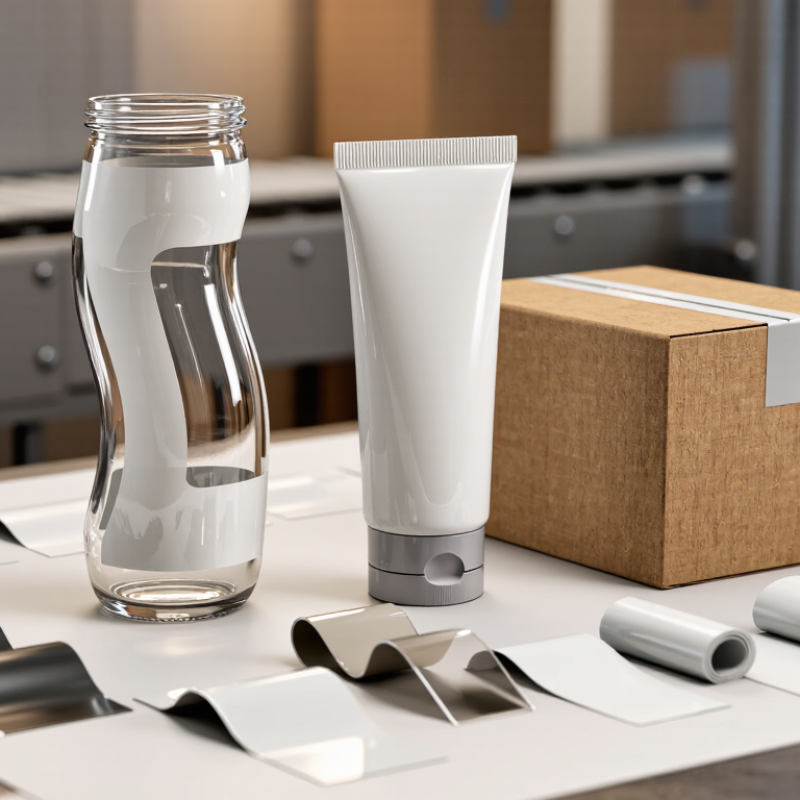
A pressure-sensitive label has three main layers: a face material, an adhesive, and a release liner. The face may be paper for a dry carton or film for a damp bottle. The adhesive stays tacky and bonds when pressed onto a surface. The liner protects it until application, then peels away. It matters.
Adhesives vary. Permanent types aim for a lasting bond, while removable options are designed to lift more cleanly. Repositionable adhesives allow brief adjustment, though results depend on the surface and conditions. A label that works on smooth glass may wrinkle on textured plastic. Temperature, moisture, and surface oils can also affect adhesion. A selection can look obvious on paper, then behave differently on a cold bottle. That gap is worth testing.
Tips: Match the face material to the label’s environment, then test the adhesive on the actual container. Apply it to a clean, dry surface and check the bond after storage. Don’t rely on a quick press alone; some adhesives need time to build strength.
Assessing the Product, Container, and Application Conditions
Choosing a pressure-sensitive label starts with the product itself. A chilled sauce jar may develop condensation, while an oily lotion can leave residue near the label area. These conditions affect adhesion and print durability. Check whether the product is stored hot, cold, or outdoors, and whether it may contact water or cleaning agents. Small details matter.
Next, examine the container’s material, shape, and surface. Some plastics resist adhesive wet-out, and textured containers create uneven contact. A label that works on a flat carton may wrinkle around a narrow bottle. Glass is often smooth, but dust or handling oils can still interfere. Measure the available label area and check for seams, ridges, and tight curves. Fit matters.
Finally, consider how and when the label is applied. A label placed on a warm, dry container may behave differently from one applied in a cold room. Confirm that the adhesive suits the application temperature and has enough time to bond before shipping. Run a small trial using actual containers and production conditions. Look for lifting edges, bubbles, smearing, or labels that shift during handling. One thing is easy to miss: rushed tests may not reveal problems that appear after days in storage. Keep notes, even when results seem obvious.
Comparing Facestock, Adhesive, and Release Liner Options
Choosing pressure-sensitive labels starts with the surface, not the catalogue. Facestock must suit both the package and the print process. Paper gives a natural look, but can wrinkle when wet. Film resists moisture and scuffing, though it may need different inks or surface treatment. Smithers’ The Future of Labels and Release Liners to 2028 forecasts global label-market value rising from about $45.5 billion in 2023 to $58.7 billion by 2028. That growth spans varied uses, so one material rarely fits every application.
Match adhesive to the real conditions: surface energy, temperature, moisture, and time in use. A removable adhesive may lift cleanly from glass, yet fail on a textured carton. Test samples on the actual package. Small details matter. For the release liner, compare paper and film by stiffness, dispensing speed, and disposal route. FINAT’s European labelstock statistics report annual regional demand above 8 billion square metres, underscoring the scale of material choices. A thinner liner can reduce material use, but may create feeding problems on fast applicators. A neat specification sheet can still mislead. Check adhesion after storage, chilling, and handling; I would not skip that imperfect, practical trial.
Matching Label Performance to Printing and Environmental Needs
Pressure-sensitive label performance starts with the printing process and the surface it must stick to. Thermal transfer printing generally needs a compatible ribbon, while direct thermal labels can darken with heat or prolonged light exposure. Inkjet and laser systems require their own coated materials. Check the printer’s specifications, then inspect a sample for crisp small text, barcodes, and rub resistance. A clean print is not enough.
Consider the full environment, not just the room where labels are applied. A container might move from a cool warehouse to a damp loading area, or sit beside a sunny window. Match the adhesive to the surface, such as textured cardboard, smooth glass, or low-energy plastic. Application temperature matters too; an adhesive that performs well at room temperature may struggle on a cold package. Test samples on actual products and allow time for adhesion to develop.
A common planning mistake is choosing material by headline claims alone. Ask how long the label must remain readable and whether it will face moisture, abrasion, oils, or cleaning agents. Small details matter. Record the test conditions, including surface cleanliness and temperature, so results can be repeated. No single label suits every job, and specifications still need real-world checking.
Testing Label Samples and Finalizing the Right Construction
Testing Label Samples and Finalizing the Right Construction
A sample that sticks well to clean glass may lift from a curved, dusty container. Test the actual surface, not just a laboratory coupon. AWA’s Global Labeling & Product Decoration Market Study places pressure-sensitive labels at roughly 40% of global label volume. That scale matters, but market share does not predict performance on your product. Run samples through the real application line, including its speed, pressure, and temperature.
Measure peel adhesion and initial tack using relevant methods such as ASTM D3330 and ASTM D6195. Then expose samples to moisture, refrigeration, abrasion, or the oils your packaging may encounter. Check edge lift after a realistic dwell period; an immediate pass can be misleading. Record the facestock, adhesive, liner, surface, and test conditions together. It sounds tedious. It prevents guesswork. A construction that works on flat cartons may wrinkle around a tight radius, while a stronger adhesive can complicate removal or dispensing. The right choice is sometimes a compromise, and a few trial results may still feel inconclusive. Use those findings to adjust one component at a time before approving production samples.
How to Choose the Right Pressure Sensitive Labels?
Testing Label Samples and Finalizing the Right Construction
Compare 24-hour peel adhesion across common surfaces before selecting a label construction. These illustrative sample results are in N/25 mm; actual performance varies with the facestock, adhesive, surface condition, and test method.
Use sample testing on the actual product and packaging, including the intended application temperature and environment, to confirm adhesion and removability requirements.