10 Fragrance Paper Tube Buying Tips for Global Buyers
Fragrance packaging is entering a more demanding stage. Buyers now evaluate appearance, protection, traceability, and environmental performance together. A Fragrance Paper Tube can create a warm, tactile unboxing experience, but visual appeal alone does not prove quality. The tube must protect glass bottles, resist compression, and maintain its shape during international transport.
Market evidence supports this shift. Grand View Research reports strong growth in sustainable packaging, driven by consumer demand and stricter environmental expectations. Smithers’ The Future of Sustainable Packaging to 2028 also identifies fiber-based formats as important alternatives to conventional packaging. These reports show direction, not a complete buying answer. Actual performance still depends on board grade, wall thickness, adhesives, coatings, and factory controls.
A reliable purchasing process should examine those details closely. Check the paper source, recycled content, FSC certification, printing accuracy, moisture resistance, and inner fit. Request compression tests, drop-test records, color samples, and a physical pre-production sample. Ask about minimum order quantities, tooling costs, lead times, and quality inspection procedures. Small details matter. A tube may look premium in a sample but deform inside a humid warehouse. That uncomfortable possibility deserves attention.
The following ten buying tips are designed for global fragrance buyers, importers, and brand teams. They connect design decisions with measurable supply-chain risks. They also recognize a practical truth: no supplier is perfect, and no sustainability claim should be accepted without evidence. Use the guidance to compare manufacturers consistently, document requirements clearly, and choose packaging that performs beyond the showroom.
Define Fragrance Paper Tube Types and Core Materials
10 Fragrance Paper Tube Buying Tips for Global Buyers
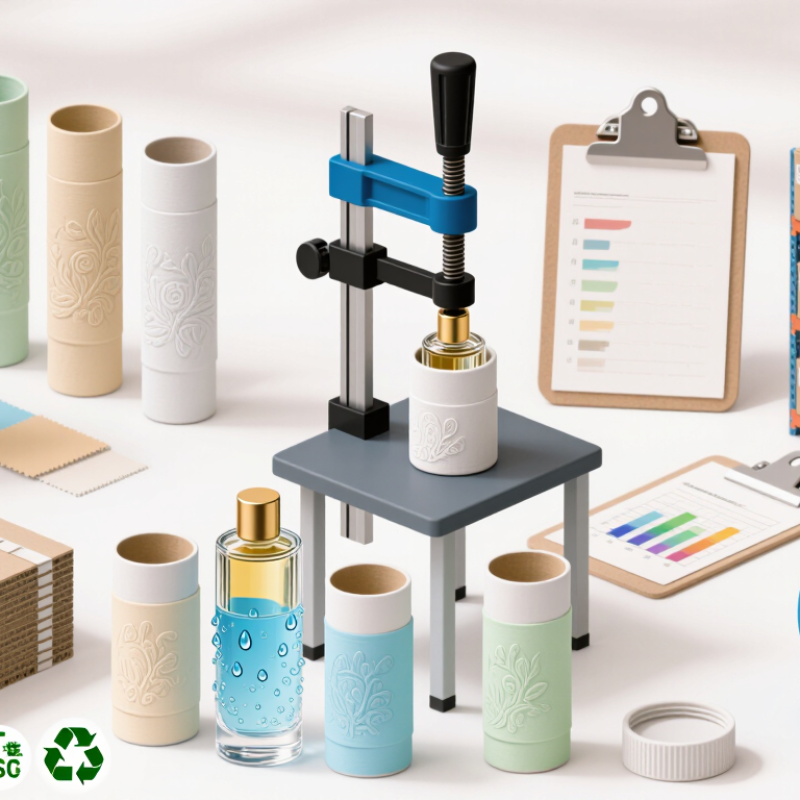
Define the tube type before comparing prices. Spiral-wound tubes suit lightweight fragrance bottles and offer efficient, continuous production. Convolute tubes provide smoother walls and stronger compression resistance. Rigid set-up tubes create a premium unboxing experience, but they usually require more labor and higher tooling costs. Telescopic structures also need careful lid tolerance checks.
Core material changes both performance and environmental claims. Kraft paper gives a natural appearance and strong fiber structure. Recycled paperboard can reduce virgin-fiber demand, but its color and strength may vary between batches. FSC-certified virgin fiber offers more consistent printability and traceability. The tube interior may need a coated paper, foil layer, or water-based barrier. Test it against alcohol, fragrance oils, adhesive, and humidity. A beautiful tube can still fail inside a warm warehouse.
The FAO reported approximately 420 million tonnes of global paper and paperboard production in 2023, showing the scale of fiber-based packaging supply. The OECD’s Global Plastics Outlook found that packaging represented about 40% of plastic waste in 2019. These figures support fiber substitution, but they do not prove automatic sustainability. Ask for recycled content, fiber origin, coating details, and disposal guidance. Do not accept vague “eco” language. In testing, compression strength, odor transfer, color migration, and drop resistance deserve equal attention. One overlooked detail remains common: a paper tube may look rigid while its shoulder or lid fails first.
10 Fragrance Paper Tube Buying Tips for Global Buyers
Define Fragrance Paper Tube Types and Core Materials
The chart compares commonly specified paper tube constructions by representative wall-thickness benchmarks. Spiral-wound tubes are formed from paper strips wrapped helically, convolute-wound tubes use layers wrapped at a right angle, and parallel-wound tubes use longitudinally aligned layers. Kraft paper and recycled paperboard are widely used as structural core materials, while coated paper is typically selected for improved printability and surface protection.
Values are representative purchasing benchmarks rather than universal limits. Confirm the final wall thickness, paper grammage, recycled content, moisture resistance, inner coating, closure fit, and fragrance compatibility with the supplier before ordering.
Assess Size, Structure, and Product Protection Requirements
For fragrance paper tubes, size is a protection decision, not a cosmetic detail. Measure the bottle, cap, and closure separately. Leave only enough clearance for an inner insert. Excess space encourages movement and raises material use.
The 2023 Smithers report, The Future of Sustainable Packaging to 2028, forecasts the sustainable packaging market will exceed US$420 billion by 2028. That growth increases pressure to remove unnecessary board and filler.
Check the tube’s structure against real distribution conditions. A rigid spiral-wound body can resist crushing, but the shoulder, lid, and base often fail first. Ask for compression, vibration, and drop testing under ISTA procedures.
Fragrance oils may also stain or weaken unsuitable inner papers. Specify a barrier layer after checking recyclability claims. “Recyclable” is not always accepted locally. This needs verification.
Global shipments add uncertainty. Humidity can soften paper, while dry air may increase cracking around tight closures. Use pilot samples with the actual glass bottle and liquid weight. Test packed units after storage, not just fresh from production.
A 2024 World Packaging Organisation trends report highlights rising demand for lighter, fiber-based packaging, yet lightweighting can reduce stacking strength. I have seen attractive tubes deform at warehouse corners.
The uncomfortable lesson is simple: a thinner tube may look efficient, but one damaged bottle can erase the savings.
Ask suppliers for board grade, wall thickness, moisture resistance, and documented test results. Forecasts are useful. Physical testing decides.
Compare Printing, Finishing, and Customization Options
When buying fragrance paper tubes, compare printing methods before discussing decoration. Offset printing suits detailed artwork and smooth color transitions. Flexographic printing often works better for larger runs and simpler graphics. Digital printing supports short batches, but unit costs may rise. Always request a physical proof. Screens can misrepresent pale beige, metallic gray, and deep black.
Finishing changes both appearance and handling. Soft-touch coating feels refined, while matte varnish reduces fingerprints more effectively. Gloss highlights selected areas, especially logos, patterns, or scent names. Foil stamping creates a bright accent, but fine lines may lose clarity. Embossing adds depth and a noticeable grip. I once approved a beautiful sample that felt too slippery in retail use. Appearance was not enough.
Customization should match the tube’s structure and production limits. Ask about diameter, height, wall thickness, insert fit, opening style, and internal protection. Water-based inks may support a cleaner material profile, but they can behave differently on textured paper. Request ink specifications, color references, coating samples, and compression tests. Small text needs careful spacing. Too many effects can make fragrance packaging look crowded. There is no perfect option. A well-documented sample usually prevents expensive corrections later.
Evaluate Pricing, Minimum Orders, and Global Shipping Terms
When buying fragrance paper tubes, compare landed cost rather than the unit price alone. A quote may exclude printing plates, inner coatings, tooling, or export packaging. Ask for a line-by-line price sheet. It should show material grade, tube dimensions, closure type, and finishing method. Small changes matter.
Request samples before discussing large minimum orders. A supplier may offer 1,000 pieces for testing, but production pricing may begin at 5,000 or 10,000 units. Confirm whether the minimum applies per size, color, or artwork. A mixed-size order can reduce risk, although it may increase setup fees. Check the sample carefully. I once focused on surface appearance and missed a loose shoulder fit. That mistake changed the final packaging plan.
Shipping terms deserve equal attention. Compare EXW, FOB, CIF, and DDP quotes only after confirming what each includes. Ask about the port, freight method, insurance, customs paperwork, and destination charges. Paper tubes are light, but cartons can occupy considerable volume. Request carton dimensions and gross weight before estimating freight. Confirm production and shipping lead times in writing. Keep currency, payment stages, inspection rights, and damage claims clear. One overlooked detail remains common: the cheapest quote can become expensive after local handling fees. Recheck the numbers.
