
Blog

Top 10 Types of Jewelry Pouches for Global Buyers?

Choosing the right Jewelry Pouch is no longer a minor packaging decision. It affects protection, presentation, storage, and perceived value. Global buyers now compare materials, closure systems, customization, and shipping performance before approving a supplier.

Grand View Research reports continued growth in the global luxury packaging market, driven by premium presentation and brand differentiation. Smithers also identifies sustainability, material efficiency, and recyclable formats as major packaging priorities. These findings matter for jewelry sellers. A velvet pouch may create warmth and elegance, while recycled cotton can support a stronger environmental message. However, neither option works universally.

Packaging-design educator Dr. Marianne Klimchuk states, “Packaging must protect the product while communicating its value.” Her observation fits jewelry purchasing closely. A pouch should cushion a fine chain, prevent surface scratches, and remain attractive after repeated handling. Small details matter, such as a smooth drawstring, reinforced seams, and a lining that does not shed fibers.

The market is not perfectly predictable. A low-cost pouch may look efficient, yet poor stitching can increase returns. A premium material may impress customers, but excessive packaging can weaken sustainability claims. Buyers must examine the full use case, including product weight, shipment distance, branding goals, and customer expectations.

This guide explores the top 10 types of Jewelry Pouch for global buyers. It compares fabric, structure, closure, customization, and practical performance. The goal is not to name one universal winner. It is to identify the pouch that best fits each jewelry product, market, and budget.
Top 10 Types of Jewelry Pouches for Global Buyers?

What Jewelry Pouches Are and Why Global Buyers Use Them

Jewelry pouches are soft containers made to hold, protect, and present small jewelry pieces. Global buyers use them during packaging, shipping, retail display, and customer storage. Unlike rigid boxes, pouches take less space and can reduce packing weight. They also create a warmer unboxing experience.

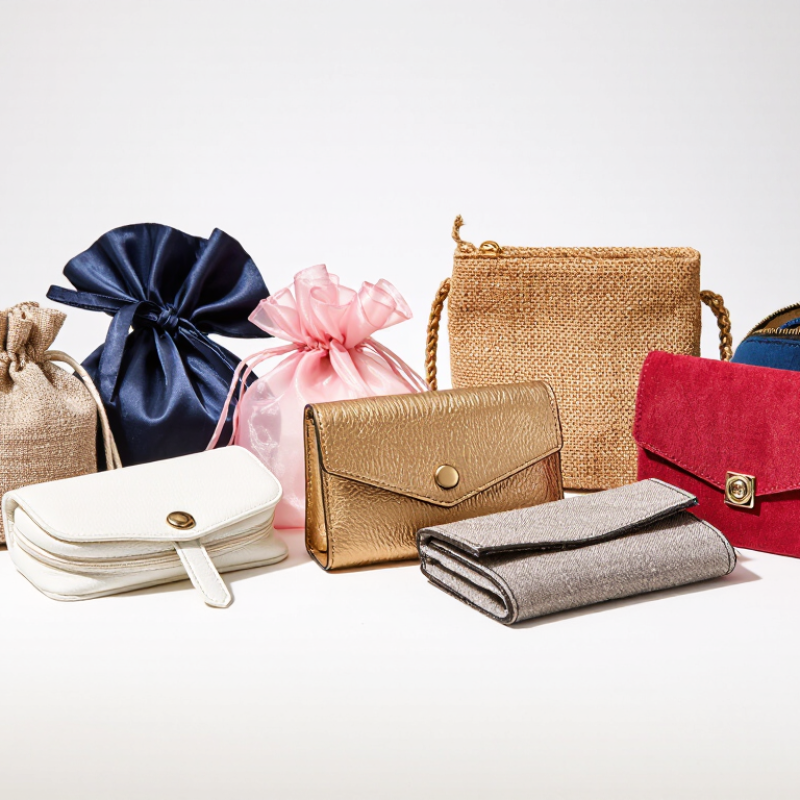
The ten common types include velvet, cotton, linen, satin, leather, suede, microfiber, organza, mesh, and zippered pouches. Velvet feels luxurious and suits earrings or rings. Cotton and linen offer a natural appearance for everyday collections. Microfiber helps reduce surface rubbing, while zippered designs provide stronger closure during transport. Drawstrings are convenient, but loose cords may frustrate some users. Small details matter.

In sourcing work, buyers should check fabric thickness, stitching, colorfastness, odor, and actual dimensions. A pouch that looks elegant may still shed fibers onto polished metal. I once underestimated interior space, and larger pendants fitted poorly. That mistake is easy to repeat. Buyers should also request samples before confirming bulk orders. Material descriptions, care instructions, and packaging claims should remain accurate for each market. Clear specifications help suppliers quote consistently and help retailers avoid disappointing customers. A 7-centimeter pouch may sound sufficient, yet its usable space can shrink after stitching and padding. Test it with the real jewelry.

Drawstring, Zipper, and Snap-Closure Jewelry Pouches

Jewelry pouches now serve more than presentation needs. They protect polished surfaces, organize small items, and support repeat purchases. Grand View Research valued the global jewelry market at USD 353.26 billion in 2023. It also projects a 6.1% CAGR from 2024 to 2030. McKinsey’s State of Fashion research describes jewelry as a resilient, fast-growing category. Packaging choices therefore deserve practical attention.

Drawstring pouches suit lightweight earrings, rings, and fabric-friendly gift sets. Their soft pull cords open quickly, but loose cords may catch inside shipping cartons.

Zipper pouches offer stronger dust protection and better control for bracelets or layered pieces. However, a low-quality zipper can scratch metal edges or fail after repeated use.

Snap-closure pouches feel tactile and premium, especially for boxed gifting. They open easily, though a hard snap may press against delicate stones. No closure wins every test. That is often overlooked.

Tips: Test each pouch with actual jewelry, not empty samples. Check zipper teeth, snap pressure, cord length, lining softness, and logo placement. Request abrasion and pull testing before a large order. A pouch that looks elegant may still waste space in transit. I would also measure packed volume carefully; this small step is easy to skip. Use recycled or certified fabrics only when suppliers can provide clear material documentation.

Velvet, Cotton, Linen, and Satin Pouch Styles

Velvet, cotton, linen, and satin create distinct jewelry pouch experiences for global buyers. Velvet offers a dense, soft surface that protects polished pieces from casual scratches. It also feels premium during unboxing. However, velvet can attract dust and raise unit costs. I would not choose it automatically. Dark velvet may also transfer lint onto light-colored jewelry.

Cotton is breathable, washable, and easy to print. It suits everyday jewelry, promotional sets, and larger order volumes. Linen adds a natural texture, but its visible slubs and wrinkles can make each pouch look slightly different.

That difference may feel authentic, or it may appear careless. Satin delivers shine and smooth movement, making it suitable for delicate presentation. Yet, many satin fabrics use polyester, so buyers should request fiber details and abrasion testing.

Softness sells. Details matter.

Material selection should reflect measurable sourcing goals. Textile Exchange’s Materials Market Report 2024 recorded about 124 million tonnes of global fiber production in 2023, with polyester representing roughly 57%. That figure shows why synthetic satin and velvet deserve careful evaluation. Grand View Research projects the luxury packaging market to grow at about 6.7% annually through 2030, increasing pressure for attractive, lower-impact packaging. Ask suppliers for fabric composition, pouch weight, colorfastness, stitching samples, and packaging dimensions. In one practical sampling mistake, a beautifully finished pouch failed because its drawstring damaged the jewelry surface. A simple lining or wider cord channel could have prevented it.

Custom, Eco-Friendly, Travel, and Display Jewelry Pouches

Top 10 Types of Jewelry Pouches for Global Buyers?

Jewelry pouches now serve more than storage. Custom velvet, cotton, linen, microfiber, and recycled-polyester pouches support different product positions. Cotton drawstring pouches suit handmade collections, while microfiber protects polished surfaces during shipping. For premium presentation, consider rigid-bottom pouches, window pouches, or double-compartment designs. The right size matters. A loose pouch can let earrings collide with chains.

Eco-friendly choices need evidence, not attractive wording. The Ellen MacArthur Foundation promotes packaging designed for reuse, recycling, or composting within practical systems. However, “biodegradable” fabric may fail without suitable industrial facilities. Buyers should request fiber composition, recycled content, dye information, and supplier testing. McKinsey’s 2023 packaging research also indicates that recyclability and material reduction remain major consumer priorities across markets. Claims still need verification.

Travel pouches should include zip closures, padded interiors, removable dividers, and small ring rolls. Flat travel sleeves reduce bulk inside luggage. Display pouches can use clear windows, shaped inserts, or hanging loops for retail counters and exhibitions. Custom printing adds recognition, but heavy coatings may reduce recyclability. That trade-off is easy to overlook. In my experience, buyers often prioritize appearance first, then discover that stitching, colorfastness, and minimum order quantities affect the real cost. A small sample test under humidity and repeated opening is wiser than trusting a digital mock-up. Reports cited: Ellen MacArthur Foundation, Global Commitment 2023; McKinsey & Company, Sustainability in Packaging 2023.

Top 10 Types of Jewelry Pouches for Global Buyers? - Custom, Eco-Friendly, Travel, and Display Jewelry Pouches

Rank Jewelry Pouch Type Typical Materials Common Size Range Closure / Structure Best Jewelry Fit Key Buyer Benefits Typical Packaging Use Customization Options Important Buying Considerations
01 Velvet Drawstring Pouch Polyester velvet, cotton velvet, or recycled polyester velvet 7 × 9 cm to 15 × 20 cm Double drawstring; soft, flexible body Rings, earrings, bracelets, small gift items Soft protection Gift-ready Cost-efficient Retail gifting, seasonal collections, jewelry sets Screen printing, heat transfer, woven label, custom color, ribbon selection Check colorfastness, lint shedding, seam strength, and the smoothness of the drawstring channel.
02 Cotton Muslin Pouch Unbleached cotton, organic cotton, or recycled cotton blends 8 × 10 cm to 20 × 25 cm Single or double cotton cord; lightweight construction Bracelets, handmade jewelry, natural-material collections Breathable Natural appearance Reusable Eco-conscious retail packaging, craft markets, subscription boxes Water-based printing, embroidery, cotton cord color, gusset, custom dimensions Organic certification applies to the fiber source, not automatically to the finished pouch; verify the complete product documentation.
03 Linen Jewelry Pouch Flax linen, linen-cotton blend, or recycled linen blend 9 × 12 cm to 18 × 22 cm Drawstring, flap, or hidden magnetic closure Minimalist jewelry, premium handmade pieces, bridal accessories Textured finish Premium feel Low-plastic look Luxury-style gifting, artisan collections, wedding favors Embroidery, garment label, pigment printing, contrast lining, custom weave Linen can wrinkle naturally; inspect fabric weight, shrinkage control, and edge finishing before bulk production.
04 Recycled RPET Zipper Pouch Recycled polyester fabric made from post-consumer PET material 8 × 10 cm to 16 × 22 cm Nylon or polyester zipper; flat or gusseted body Rings, chains, earrings, travel-sized jewelry sets Secure closure Water-resistant options Travel-friendly Online orders, travel kits, promotional jewelry sets All-over printing, logo label, zipper pull, lining, recycled-content specification Ask for recycled-content verification, zipper cycle testing, lining details, and coating composition.
05 Leather or Vegan Leather Snap Pouch Full-grain or split leather, polyurethane-based vegan leather, or microfiber leather 7 × 9 cm to 14 × 18 cm Metal snap button; structured or semi-structured body Rings, pendants, cufflinks, premium small accessories Durable shape Premium presentation Easy opening Premium gifting, corporate gifts, high-value product presentation Debossing, foil stamping, edge paint, custom lining, snap finish, color matching Leather and synthetic leather have different care, compliance, and environmental profiles; specify the material precisely.
06 Travel Jewelry Organizer Pouch Polyester, nylon, recycled fabric, microfiber, mesh, and foam padding 12 × 16 cm to 24 × 30 cm Zipper, elastic loops, ring roll, earring panel, and internal compartments Multiple rings, necklaces, earrings, watches, and bracelets Compartmentalized Tangle reduction Portable Travel retail, holiday gifting, jewelry care kits Compartment layout, mirror, hanger, handle, printed lining, custom exterior panels Evaluate compartment dimensions, padding thickness, zipper quality, and whether chains can be separated effectively.
07 Flat Display Pouch with Clear Window Canvas, cotton, polyester, recycled fabric, and transparent TPU or PVC window 10 × 12 cm to 20 × 25 cm Zip closure or flap with transparent viewing panel Rings, earrings, small collections, point-of-sale displays Product visibility Easy merchandising Compact storage Retail counters, trade events, sample kits, e-commerce dispatch Window size, printed panels, hanging loop, backing color, zipper, internal card insert Clearly identify the window material and test transparency, yellowing resistance, flexibility, and seam adhesion.
08 Bamboo Fiber or Cellulose-Based Pouch Cellulose-based nonwoven fabric, bamboo-viscose blend, or plant-fiber blend 8 × 10 cm to 16 × 20 cm Drawstring, flap, or stitched fold-over closure Lightweight jewelry, sustainable collection launches, promotional items Plant-fiber positioning Lightweight Soft hand feel Eco-themed campaigns, event giveaways, natural-style product lines Water-based ink, natural cord, custom blend, recycled paper tag, bespoke sizing “Bamboo” may refer to regenerated cellulose rather than raw bamboo fiber; confirm fiber composition and disposal guidance.
09 Tarnish-Resistant Jewelry Pouch Anti-tarnish treated fabric, non-abrasive microfiber, cotton, or silver-protective textile 7 × 9 cm to 18 × 24 cm Drawstring, envelope flap, zipper, or heat-sealed sachet format Silver, copper-alloy, plated jewelry, and long-term storage pieces Storage protection Low abrasion Longer shelf life Jewelry boxes, after-sales care, collector storage, export packaging Anti-tarnish textile grade, insert card, custom lining, humidity indicator, closure style Performance depends on airtightness, moisture, sulfur exposure, and storage conditions; request documented test methods.
10 Custom-Shaped Presentation Pouch Velvet, satin, cotton, linen, felt, microfiber, or mixed-material construction Custom; commonly 8 × 8 cm to 25 × 30 cm Magnetic flap, zipper, drawstring, snap, or fitted insert Special collections, layered necklaces, watches, brooches, and gift sets Brand differentiation Exact fit Premium display Launch campaigns, luxury gifting, limited editions, visual merchandising Die-cut shape, molded insert, custom lining, embroidery, metal fittings, packaging set integration Confirm prototype approval, tolerance limits, minimum order quantity, tooling charges, and transit protection.

How Global Buyers Compare Jewelry Pouch Suppliers and Options

Global buyers compare jewelry pouch suppliers by more than appearance. They assess ten common options: velvet, cotton, linen, satin, suede, microfiber, organza, paper, leatherette, and recycled-fiber pouches. Each type creates a different retail impression. Velvet feels premium, while cotton suits natural product lines. Organza shows the item, but offers less protection from abrasion. Leatherette looks structured, yet material sourcing needs careful review. Good buying decisions begin with the pouch’s actual use. Will it travel, hang, stack, or sit inside a gift box?

Experienced purchasers request physical samples before approving bulk production. They check stitching, drawstring tension, lining, odor, color consistency, and print alignment. A supplier should explain fabric composition, care limits, packaging methods, and quality-control steps. Ask for measurable details, not vague promises. Useful comparisons include minimum order quantity, sample charges, production capacity, lead time, and replacement handling. Communication matters. Slow replies can signal future delays, although one missed email proves little. That point is easy to overlook.

For overseas orders, buyers also review export experience, test reports when relevant, and clear commercial documents. They should compare delivered cost, not only the unit price. A cheaper pouch may have thin fabric, weak cords, or excessive packaging waste. Custom sizing improves fit but can increase setup time and material loss. Recycled fibers may support sustainability goals, but buyers should verify composition claims. No supplier is perfect. A small pilot order can reveal problems that polished samples hide. Records, photos, and agreed tolerances make later decisions fairer.