2026 Best Business Label Printer for Global Buyers
Choosing the 2026 Best Business Label Printer for Global Buyers requires more than comparing print speed or purchase price. A reliable Business Label Printer must perform across warehouses, retail counters, laboratories, and export desks. It should produce sharp barcodes, durable text, and consistent labels during long production runs. Small failures matter. A faded serial number can delay a shipment or trigger costly rework.
Market evidence supports this demand. Grand View Research reported that the global printed labels market reached approximately USD 44.76 billion in 2023, with continued growth expected through 2030. Smithers’ packaging research also highlights steady movement toward digital, customized, and shorter-run label production. These trends favor printers that handle changing artwork, multilingual information, and variable data without excessive setup time. Global buyers should examine resolution, media compatibility, printhead life, software support, and regional service coverage. The cheapest model may become expensive after repeated maintenance calls.
Barcode standards matter, too. GS1’s Sunrise 2027 initiative encourages businesses to prepare for wider use of 2D barcodes at retail checkout. That change increases the importance of accurate, scannable output. However, printer specifications alone do not guarantee performance. Testing with actual thermal stock, ribbon, adhesives, and scanning equipment remains essential. A supplier’s claims deserve verification.
This guide compares practical options for international purchasing teams. It considers total ownership cost, workflow fit, connectivity, energy use, and support reliability. No single printer suits every business. That is the uncomfortable part. A compact desktop unit may serve a boutique perfectly, yet fail under warehouse pressure. Real-world testing should decide the final purchase.
Business Label Printer Types: Direct Thermal vs. Thermal Transfer in 2026
2026 Best Business Label Printer for Global Buyers
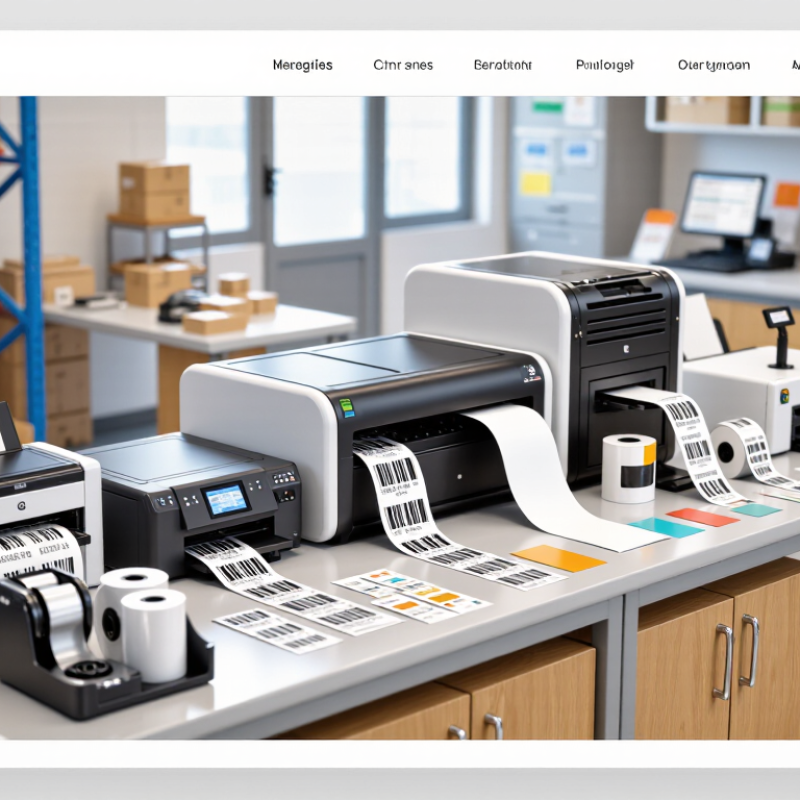
Direct thermal and thermal transfer printers serve different business realities. Direct thermal printing uses heat-sensitive stock, so it needs no ribbon. It suits shipping labels, receipts, queue tickets, and short-term warehouse identification.
Thermal transfer uses a ribbon to transfer ink onto the label surface. The result usually handles sunlight, moisture, friction, and longer storage better.
It fades.
Smithers’ 2024 thermal-printing outlook projects the sector to grow at roughly 5% annually through 2029. That growth reflects demand for traceable logistics, retail identification, and industrial labeling. Buyers should not treat that figure as a guarantee. Regional media prices, labor costs, and replacement-part availability can change the calculation quickly. A direct thermal unit may reduce consumable complexity, while thermal transfer can lower relabeling costs for durable applications.
In practical testing, print a sample label and rub it with a damp cloth, then expose it near a window for several days. Check barcode readability, adhesive performance, and text contrast. GS1 guidance emphasizes consistent barcode quality, but printer choice alone cannot ensure scanning reliability. Direct thermal is often efficient for labels used within days or weeks. Thermal transfer is safer for asset tags, outdoor cartons, chemical-resistant identification, and records kept for years. I would still question every specification sheet. “Industrial” does not always mean suitable for heat, dust, or continuous duty.
Core Buying Metrics: 203–300 dpi, 4–8 ips, and Monthly Duty Cycle
2026 Best Business Label Printer for Global Buyers
For global buyers, print resolution and speed should match the label’s real working environment. The 203–300 dpi range suits shipping labels, carton identifiers, and many retail barcodes. Higher resolution is not automatically better. Tiny text may improve, but consumable costs and processing demands can increase.
A 4–8 ips rating supports busy packing stations without making operators wait. However, rated speed is measured under controlled conditions. Actual output drops when labels contain dense graphics, variable data, or frequent pauses. A 2024 AIDC market report from VDC Research links automation growth with faster, more reliable identification workflows, but speed alone cannot guarantee scan quality.
Monthly duty cycle deserves closer attention. The Parcel Shipping Index 2024 recorded 161.3 billion parcels worldwide in 2023, showing why occasional-use equipment may struggle in commercial shipping. Buyers should estimate monthly labels, then choose a printer rated comfortably above that volume. For example, 40,000 labels per month requires more than a 40,000-label rating.
Leave room for mistakes.
A printer running at its limit may overheat, misfeed, or require frequent maintenance. I would also test a full roll, multilingual text, and low-light scanning before purchase. Report figures guide selection, but actual samples reveal weaknesses that specifications often hide.
Global Compliance: GS1 Barcodes, ISO/IEC 15416 Grades, and Label Sizes
For global buyers, the best business label printer in 2026 must support accurate GS1 barcodes and consistent print quality. A barcode can look sharp while failing at a distribution center scanner. I recommend testing actual labels, not only reviewing printer specifications. Use the final ribbon, stock, and print speed during testing.
GS1 symbols need correct data structure, quiet zones, magnification, and placement. Common examples include GTIN, batch details, and serial numbers. Confirm the required application identifier before production. Then verify printed symbols with equipment that reports ISO/IEC 15416 grades. Aim for a stable passing grade across multiple labels. One perfect sample proves little. Ten samples reveal more.
Label size also affects compliance. A 100 × 150 mm shipping label may provide space for logistics data and readable human text. A 50 × 25 mm product label demands tighter layout control. Check margins, corner radius, adhesive performance, and media compatibility. Thermal transfer may suit long-term storage, while direct thermal labels can fade under heat or sunlight. My practical mistake was judging only the first print. After several rolls, alignment drift appeared. Recalibration helped, but it exposed a weakness in our inspection routine. Keep a verification log, replace worn printheads promptly, and confirm readability after transport, handling, and storage.
Total Cost of Ownership: Media, Printheads, Energy, and 5-Year ROI
2026 Best Business Label Printer for Global Buyers
A printer’s purchase price can hide its real cost. Total cost of ownership includes media, printheads, energy, maintenance, labor, and downtime. Smithers’ 2024 label-printing market study identifies material efficiency and digital workflow control as major cost drivers. That matches warehouse experience: a 1% feed error can waste hundreds of meters each month. Measure actual label width, liner thickness, monthly volume, and rejected rolls before comparing quotations.
Printheads deserve special attention. A replacement may cost less than one production stoppage, yet frequent cleaning can shorten its service life. ENERGY STAR’s Imaging Equipment Specification Version 3.0 evaluates typical electricity consumption, including operating and sleep modes. Buyers should request TEC data, not only peak wattage.
For example, a 0.3 kWh daily difference becomes about 548 kWh over five years, assuming 300 operating days annually. Local electricity prices then turn a small specification into a visible expense.
Use a five-year worksheet. Add printer price, media consumption, printhead replacements, service visits, electricity, and operator time. Subtract expected resale value.
My first calculation ignored rejected labels. That was a mistake. A realistic model might compare a 5% waste rate with a 2% rate across 1,000,000 labels. The cheaper machine may lose.
Exchange rates, import duties, and local technician availability also affect global ROI. Some estimates will remain uncertain, so record every assumption and test the result under higher media prices.
2026 Buyer Framework: Ranking Printers by Volume, Region, and Workflow
For global buyers, the best business label printer depends on workflow, not headline speed. GS1 reports more than six billion barcode scans daily, so readable output remains a serious operational requirement. Rank models by monthly volume: light users need reliable desktop thermal printing, while warehouses need durable units with larger media capacity and fast replacement cycles. A printer rated for 100,000 labels monthly may struggle when labels include dense barcodes, small text, or frequent pauses.
Region changes the ranking. European buyers may prioritize compact designs, multilingual software, and energy efficiency. North American operations often value wider media support and integration with shipping platforms. In humid coastal markets, enclosed media paths can reduce curling and adhesive problems. Test local power compatibility and service availability before purchase. Small details matter.
Workflow should decide the final shortlist. Direct thermal printing suits short-life shipping labels, while thermal transfer supports longer-lasting inventory labels. Smithers’ digital packaging research continues to show strong growth in short-run, customized print, making flexible connectivity increasingly useful. Ethernet, Wi-Fi, USB, and browser-based management reduce manual handling. However, wireless features are not automatically better. They can add setup friction. My practical ranking is simple: prioritize print consistency first, regional compatibility second, and advanced automation third. I may be overly cautious, but a slower printer with fewer interruptions often costs less than a faster machine that requires constant intervention.
Related Posts
-
10 Best Business Label Printers for Global Buyers
-
Top 10 Package Label Printer Manufacturers from China at the 137th Canton Fair
-
Top 10 Package Label Printers for Global Buyers
-
How to Choose the Best Logo Label Printer for Your Business Needs
-
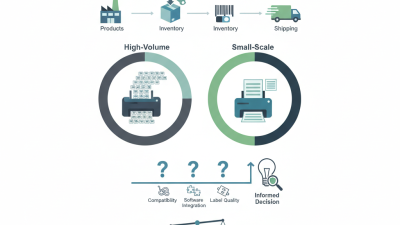
Top Business Label Printer Options for Efficient Labeling Solutions?
-
Top 10 Best Logo Label Printers for Your Small Business in 2023